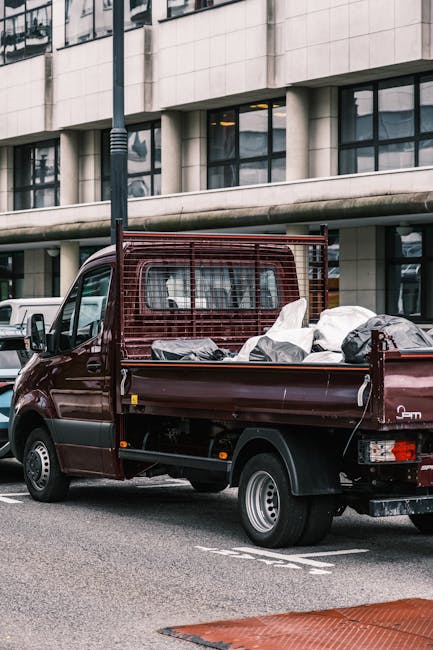
Rubbish clearance Kingston Hospital area KT2 access tips
If you are arranging rubbish clearance in the Kingston Hospital area of KT2, the tricky part is often not the waste itself - it is the access. Tight roads, patient traffic, delivery vans, limited stopping space, and the need to stay out of the way can turn a simple clearance into a slow one if nobody plans ahead. That is why Rubbish clearance Kingston Hospital area KT2 access tips matter. A little preparation can save time, reduce stress, and make the whole job feel far more organised, especially around a busy hospital environment where timing really does matter.
In this guide, you will find practical, local-minded advice on how rubbish clearance near Kingston Hospital usually works, what access issues to think about, how to avoid delays, and what a good clearance plan looks like in real life. We will also cover useful checks for flats, houses, refurb jobs, and mixed loads, plus a simple checklist you can use before collection day. Nothing fancy. Just the stuff that helps things go smoothly.
Table of Contents
- Why Rubbish clearance Kingston Hospital area KT2 access tips Matters
- How Rubbish clearance Kingston Hospital area KT2 access tips Works
- Key Benefits and Practical Advantages
- Who This Is For and When It Makes Sense
- Step-by-Step Guidance
- Expert Tips for Better Results
- Common Mistakes to Avoid
- Tools, Resources and Recommendations
- Law, Compliance, Standards, or Best Practice
- Options, Methods, or Comparison Table
- Case Study or Real-World Example
- Practical Checklist
- Conclusion
- Frequently Asked Questions
Why Rubbish clearance Kingston Hospital area KT2 access tips Matters
Near Kingston Hospital, access is often the biggest variable in a clearance job. You may only have a narrow window to stop, or the vehicle may need to wait while pedestrians, patients, or staff move through the area. Some entrances feel straightforward on paper and then turn awkward once a van is on the ground. To be fair, that is normal in busy parts of KT2.
Good access planning matters because it affects everything: how quickly items can be removed, whether labour is needed for a longer carry, whether the vehicle can park legally, and whether bulky waste can be loaded without blocking anyone. A rushed arrival can lead to awkward reversing, frustrated neighbours, and a job that takes twice as long as expected. Nobody wants that first thing in the morning.
It also matters for safety. Near hospitals, you often have a mix of foot traffic, mobility aid users, delivery vehicles, and people who are already under pressure. A clearance team that plans access properly is not only more efficient; it is simply more considerate. That counts for a lot.
Expert summary: In the Kingston Hospital area, the best rubbish clearance jobs are rarely the quickest on arrival - they are the ones where access, parking, item handling, and timing were thought through before anyone lifted a box.
How Rubbish clearance Kingston Hospital area KT2 access tips Works
At its simplest, a rubbish clearance works like this: you identify what needs to go, work out where the items are located, decide how the vehicle will get close enough to load them, and then remove the waste safely and efficiently. Around Kingston Hospital, that process needs a bit more detail than usual.
For example, a ground-floor flat near the hospital may look easy, but the real challenge could be the lack of waiting space outside. A basement office clearance may have plenty of room at the front door but a tight staircase, a narrow shared corridor, or a loading area that is awkward for a large vehicle. Access is not just about the street. It is the full route from waste pile to van.
Good planning usually includes:
- checking whether the road allows short stopping or only formal parking
- looking at the distance from the property to the vehicle
- identifying stairs, lifts, gates, or shared entrances
- noting if there are restrictions during busy hours
- separating bulky, fragile, and specialist items before collection
If your load includes furniture, appliances, or mixed household waste, it helps to know what can go together and what needs separate handling. For general guidance on acceptable loads, the page on what can go in a skip is a useful reference point, even if you are not hiring a skip. It gives you a practical sense of sorting, which is often the same thinking needed for a clearance vehicle.
And if the job is more than a few loose bags - perhaps a full flat, old office contents, or a garage full of mixed stuff - a broader waste removal approach may be more suitable than trying to tackle it piecemeal. That flexibility can make a big difference in a constrained area.
Key Benefits and Practical Advantages
The main advantage of planning access properly is simple: the job gets done with fewer surprises. But there are several knock-on benefits that are easy to underestimate until you are the one standing outside with a pile of furniture and nowhere obvious to park.
- Less delay: The team arrives knowing where to stop and how to load.
- Lower disruption: Fewer back-and-forth trips through shared spaces.
- Better safety: Reduced risk of slips, bumps, or blocked walkways.
- Cleaner handover: The property is left tidier, and neighbours are less affected.
- More accurate pricing: Access is clearer, so quotes tend to be more realistic.
There is also a customer-service benefit that people sometimes forget: a smooth clearance feels calm. You know where the van is going, where the items will go, and what happens next. That reduces that slightly frazzled feeling you can get when several things are happening at once. Small thing, but it matters.
For larger clearances, especially where furniture is involved, planning access well can help you choose between a targeted furniture job and a wider clearance. If the load is mainly chairs, wardrobes, tables, and sofas, the dedicated furniture clearance service may fit the job neatly. If the items are ready for end-of-life disposal and you want the right handling route, furniture disposal can be the better fit.
In the right setting, the right access plan saves more than time. It saves hassle. And honestly, that is often what people really want.
Who This Is For and When It Makes Sense
This kind of access planning is useful for more people than you might think. It is not just for commercial sites or large refurbishments. In and around KT2, it often helps anyone dealing with limited parking, shared entrances, or time-sensitive collections.
It makes sense if you are:
- clearing a flat near Kingston Hospital with limited roadside space
- emptying a house where items are stored in a back garden, loft, or garage
- getting rid of office waste from a small practice or support space
- handling builders' rubble, packaging, or old fixtures after works
- disposing of bulky items like mattresses, sofas, fridges, or appliances
If you are managing a rental turnover, the access issue is often about speed and courtesy. If you are a homeowner, it may be about getting the car out of the drive, keeping paths clear, and not annoying three neighbours before lunchtime. Different problem, same need for planning.
For landlords and agents, a combined home or flat clearance can be useful when a property needs resetting quickly. A service such as flat clearance is often a better match than trying to piece together multiple small removals. In houses, a broader house clearance or home clearance may be the sensible route, especially if access through side paths or rear entrances needs to be managed carefully.
And if the job involves larger domestic surplus, a garage clearance or loft clearance can be particularly helpful because the awkward part is often not the waste itself, but the route to get it out.
Step-by-Step Guidance
Here is a simple way to prepare for rubbish clearance in the Kingston Hospital area without overcomplicating it.
- List the items clearly. Write down what needs to go, including any heavy or awkward pieces. A quick photo set helps too. It does not have to look perfect, just honest.
- Check access from the property to the road. Look at doorways, stairwells, lifts, narrow hallways, gates, and turning space. If you can take a trolley all the way out, great. If not, plan for hand-carrying.
- Think about vehicle stopping space. Is there room for a van to pause without blocking traffic or an entrance? If not, expect a longer carry or a timed arrival.
- Separate special items early. Appliances, mattresses, furniture, and hazardous materials may need different handling. A fridge is not just another bulky item, and paint tins are definitely not just another box.
- Keep the route clear. Remove trip hazards, open gates in advance, and make sure shared corridors are not blocked by small bits and pieces. Those little obstacles are the ones that waste time.
- Confirm timings. Near a hospital, a late afternoon arrival may be less pleasant than a mid-morning slot, depending on traffic and footfall. It is worth agreeing a realistic window.
- Plan for loading order. Put the heaviest or most urgent items nearest the exit if you can. This sounds obvious, but it saves a surprising amount of fuss.
In practice, the best collections feel almost boring in the good way. The vehicle arrives, the route is obvious, the items are ready, and everyone gets on with their day. That is usually the goal.
If you are organising work-related clearance, you may also want a service designed for premises with regular access constraints. The page on office clearance is useful if you are dealing with desks, filing, and workplace clutter in a tight urban setting. If your waste comes from contractors or renovation work, builders waste clearance is often the more appropriate option.
Expert Tips for Better Results
Here are the small things that make a big difference. Some are obvious once you hear them, but they are easy to miss when you are in a rush.
- Send photos before collection. Photos of the waste pile, the front access, and any awkward corners help the team judge the job properly.
- Measure narrow points. A quick tape measure on doors, corridors, and stair turns can prevent a lot of guesswork.
- Use labels for mixed loads. If some items are staying and others are going, mark them. One label can save a very awkward mistake. Ask me how I know.
- Keep parking instructions simple. "Stop by the front gate" is much better than a long paragraph that nobody can decode at 7.30 in the morning.
- Have a backup plan. If the nearest space is blocked, know the next best place for the van to wait safely.
One helpful habit is to think in terms of the loading route, not just the address. Front room, hallway, entrance, pavement, van. If there is a weak point anywhere in that chain, the whole job slows down. A good clearance team spots it quickly; a good customer flags it early. Simple as that.
For bulky household items, it can also help to look at related services. If you are clearing a bedroom or living area, the specialist mattress and sofa disposal page is worth a look. For broken appliances, the fridge and appliance removal service is relevant, particularly when items need careful movement through tighter access points.
Common Mistakes to Avoid
The most common problems are usually not about the rubbish itself. They are about assumptions.
- Assuming the van can park right outside. In the Kingston Hospital area, that is not always realistic.
- Leaving items in multiple rooms. If the team has to hunt around the property, the job takes longer and feels messier.
- Forgetting shared access rules. Flats and converted buildings often have communal spaces that need extra care.
- Mixing general waste with restricted items. Hazardous materials, sharp items, or electricals may need separate handling.
- Not mentioning stairs or lifts. That one causes more headaches than people expect.
There is also the classic "I thought it would all fit in one go" moment. Happens all the time. A garage that looked half full turns out to be packed with old paint, broken shelving, and a heavy fridge hiding at the back. Suddenly the job changes shape. Better to say too much than too little at the start.
If the clearance includes high-risk materials or awkward categories, ask about safe handling in advance. The hazardous waste disposal service exists for a reason, and it is one of those areas where guesswork is a bad idea.
Tools, Resources and Recommendations
You do not need a lot of special equipment to prepare properly, but a few basic tools help a great deal.
- Phone camera: Take photos of the waste, the frontage, and any awkward access points.
- Tape measure: Handy for doors, lifts, gates, and narrow stair turns.
- Marker tape or labels: Useful for marking items that must not be removed.
- Gloves and sturdy footwear: Sensible for anyone helping move items before the team arrives.
- Simple notepad: Great for listing what is going, what is staying, and what needs special handling.
For planning and peace of mind, it also helps to look at pages that explain how a provider works. The pricing and quotes page is useful if you want a clearer idea of what may affect the final cost, while recycling and sustainability is helpful if you want to understand how collected waste may be sorted afterwards. People often care about that more than they first admit - and fair enough.
If you need to book in quickly, you can also use the book online option when it suits your schedule. That is often a practical step if you already know what needs clearing and just want the process to move.
Law, Compliance, Standards, or Best Practice
Rubbish clearance in the UK should be handled carefully and lawfully, especially where waste is being moved off-site for disposal or recycling. You do not need to become an expert in waste legislation to arrange a job properly, but it helps to follow good practice and choose a service that treats safety and duty of care seriously.
At a practical level, that means checking that waste is handled responsibly, that anything hazardous is separated correctly, and that the people carrying the waste have sensible procedures in place. Near Kingston Hospital, where public access and pedestrian movement matter more than usual, safe loading and considerate behaviour are part of best practice, not optional extras.
It is also wise to ask how a provider manages insurance and site safety. If you are comparing services, the pages on health and safety policy and insurance and safety are the sort of trust signals you should look for. They show that the operator is thinking beyond just "pick it up and go".
For business customers, especially clinics, practices, or office spaces near the hospital, confidentiality may also matter. Old paperwork, records, and files should be treated properly, and a service such as confidential shredding is the sensible route for sensitive material.
One more thing. If you are clearing items on someone else's behalf - a relative, tenant, or business premises - make sure you have permission and a clear list of what is to be removed. That avoids disputes later. Small detail, big relief.
Options, Methods, or Comparison Table
When access is tight around Kingston Hospital, the right method depends on the type and volume of waste. Here is a simple comparison to help you decide.
| Method | Best for | Access impact | Typical advantage |
|---|---|---|---|
| Man-and-van style clearance | Mixed household waste, bulky items, quick removals | Works well where the vehicle can stop nearby | Flexible and fast for awkward loads |
| Flat or house clearance | Full-property emptying, rentals, probate, end-of-tenancy jobs | Useful where there are many rooms or shared entrances | Covers more of the property in one visit |
| Furniture-focused removal | Sofas, wardrobes, tables, beds | Good when items are large but not too numerous | Simple solution for bulky domestic items |
| Builders waste clearance | Renovation debris, packaging, offcuts, rubble | Needs clear loading access and a sensible route to the vehicle | Suited to short, heavier, messier jobs |
| Waste removal | General one-off clearances and mixed loads | Best when access details are shared in advance | Broad and adaptable |
If your job is just a few items, keep it simple. If the property is busy, cluttered, or hard to reach, the broader clearance options are usually less stressful. Truth be told, trying to save a little effort on planning often costs more effort later.
Case Study or Real-World Example
Imagine a second-floor flat near Kingston Hospital with an old sofa, two wardrobes, several black bags, and a broken under-counter fridge. Nothing dramatic. Just a typical mixed clearance.
The first challenge is access. The building has a shared entrance, a narrow stairwell, and no obvious stopping place directly outside. The solution is not to force the job, but to plan it properly: the resident clears the hallway, the team arrives in a pre-agreed window, and the largest item is moved first while the route remains open. The fridge is handled separately because it needs the right approach and a bit more care.
Now compare that with a poor-plan version of the same job. Items are still in separate rooms, the van arrives at the busiest time of day, and nobody has checked the stair width. Suddenly you are dealing with delays, extra carrying, and a much less relaxed mood all round. It is the same waste. The difference is access planning.
This kind of job is exactly where a service like flat clearance or waste removal earns its keep. Not because the items are unusual, but because the access is a bit fiddly and the timing matters. A simple arrangement, done well, is often the best outcome.
And yes, the resident in this example was glad to have the hallway back by lunchtime. You can almost hear the sigh of relief.
Practical Checklist
Use this before collection day. It is basic, but it works.
- Take photos of all items to be removed.
- Check the route from the waste to the vehicle.
- Measure doorways, stair turns, gates, and any lift access.
- Confirm whether parking or short-stay stopping is available.
- Separate items that are staying from items that are going.
- Move fragile objects out of the way.
- Identify any appliances, mattresses, or specialist items early.
- Flag hazardous waste before the team arrives.
- Keep corridors, drives, and paths as clear as possible.
- Agree the arrival window and contact method in advance.
Quick takeaway: the more the access route is prepared, the less the clearance feels like a scramble.
Get a free quote today and see how much you can save.
Conclusion
Rubbish clearance in the Kingston Hospital area of KT2 is rarely difficult because of the waste alone. It becomes awkward when access is underestimated. The good news is that the fix is straightforward: plan the route, share clear photos, think about parking, separate special items, and choose the right type of clearance for the job.
Once that is done, the whole process tends to run much more smoothly. Less waiting, less back-and-forth, less hassle. And in a busy local area like this, that calm efficiency is worth a lot. If you are organised from the start, even a tight space can be handled sensibly.
Sometimes the best clearance is the one you barely notice happening. That is the real goal, really.
Frequently Asked Questions
What should I check before rubbish clearance near Kingston Hospital?
Check parking, stopping space, stair access, door widths, and whether the waste is all in one place. Photos of the frontage and the items are especially helpful.
Why is access such a big deal in KT2 near the hospital?
Because the area can be busy, with pedestrians, deliveries, and limited parking. If the van cannot get close enough, the job takes longer and may need a different plan.
Can a rubbish clearance team deal with flats and shared entrances?
Yes, but shared access needs more care. Let the team know about lifts, stairwells, entry codes, and any building rules before the visit.
What happens if the van cannot park directly outside?
The team may need to use a longer carry, wait for a safe space, or adjust the arrival time. That is normal in urban areas, especially around busy sites.
Do I need to sort my rubbish before the collection?
It helps a lot. Keep general waste separate from items like fridges, mattresses, and hazardous materials. Good sorting makes loading faster and safer.
Is furniture clearance different from general waste removal?
Often, yes. Furniture clearance is more focused on bulky domestic items, while general waste removal covers a broader mix of rubbish and clutter.
What if I have old appliances to remove as well?
Flag them early. Appliances often need special handling, so it is better to mention them in advance rather than assume they can go with everything else.
How do I prepare a house or flat for a quicker collection?
Clear the route, gather the items in one area if possible, remove anything staying behind, and keep halls and exits free. A little preparation goes a long way.
Can rubbish clearance be arranged for builders' waste near the hospital?
Yes. If you have renovation debris, packaging, or rubble, a builders waste clearance approach is usually the right fit, provided access is explained clearly.
What should I ask about before booking?
Ask about access requirements, waste types accepted, timing, loading method, and any special handling for bulky or sensitive items. It keeps surprises to a minimum.
How do I know if the waste includes hazardous items?
If you are unsure, separate anything like paint, chemicals, oily containers, or other potentially risky materials and mention them before the clearance. When in doubt, ask first.
What is the easiest way to book a clearance for a tight-access property?
Send clear photos, describe parking and access, and use a straightforward booking route. If the job is ready, booking online can be a simple next step.
Is there a best time of day for clearance near Kingston Hospital?
Usually a time that avoids peak local activity is easiest, but it depends on the property and the access route. The best slot is the one that lets the job be done safely and without rushing.
If you want a smoother, more predictable clearance in KT2, start with the access - not the rubbish pile. That one habit can make the whole day feel easier.